






5. Wtyczka – Zarządzanie przesyłkami
Zarządzaj przesyłkami UPS z WooCommerce. Obejmuje tworzenie przesyłek, drukowanie etykiet, śledzenie i unieważnianie przesyłek.
Przewodnik krok po kroku
1. Otwórz zamówienia
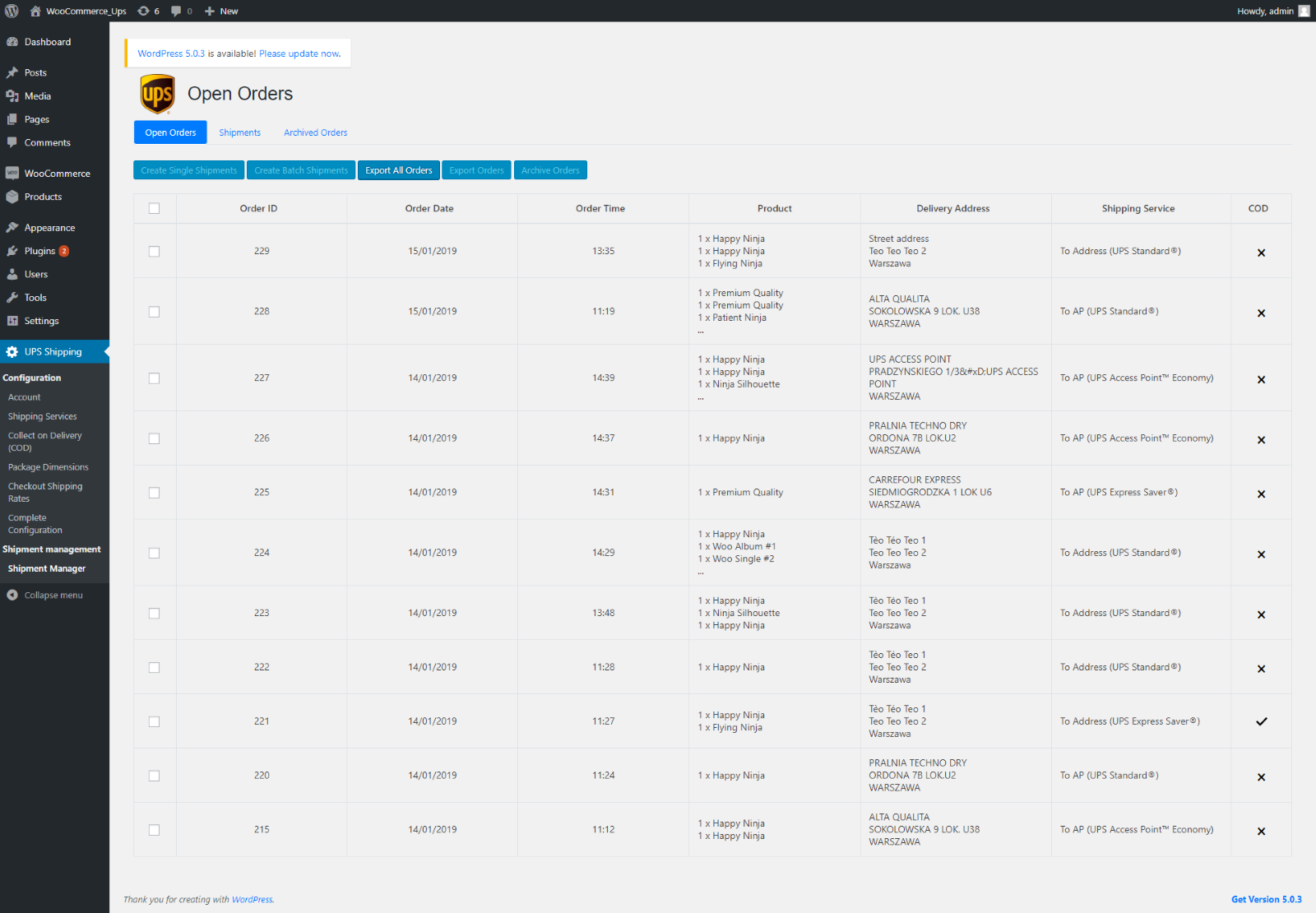
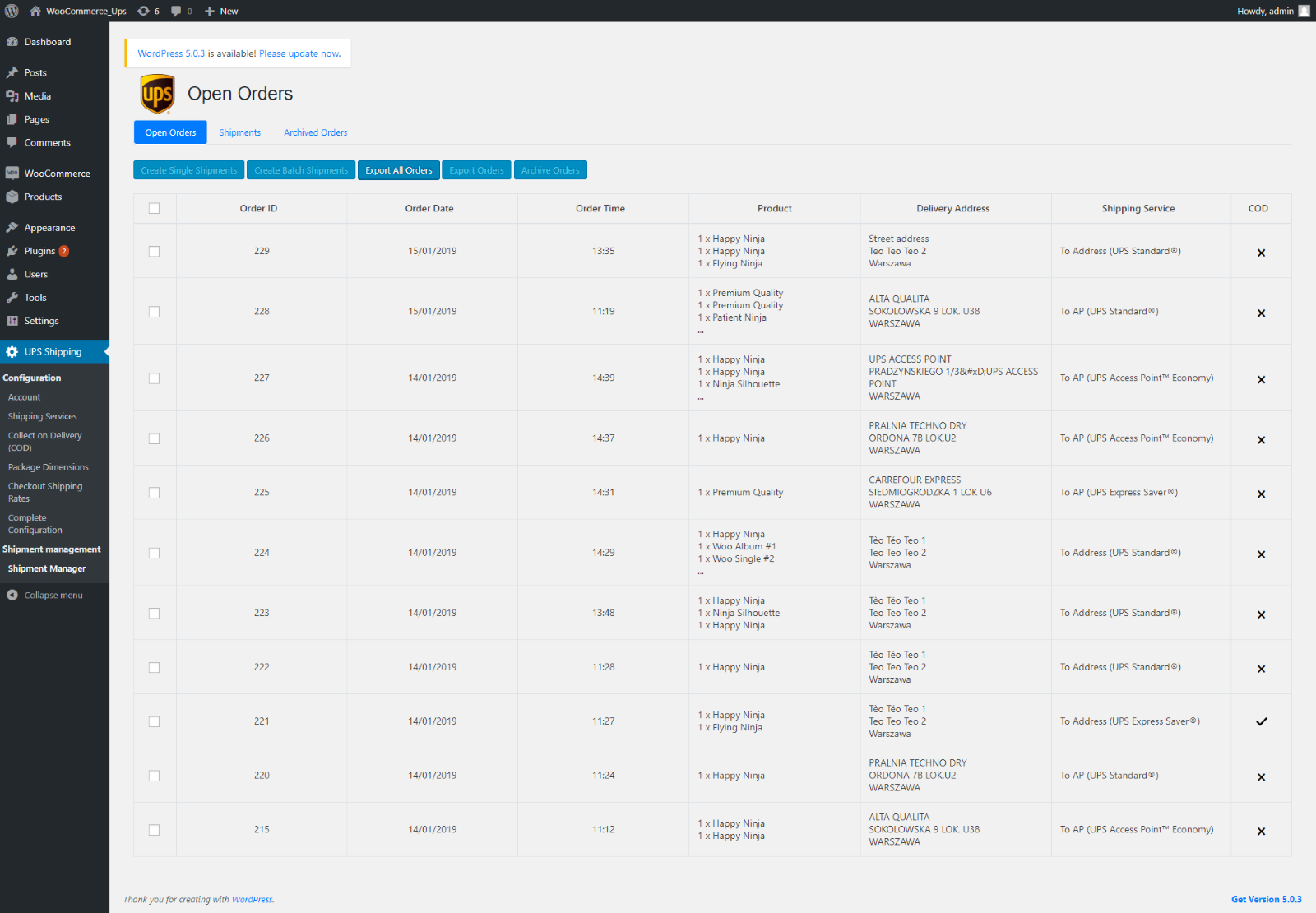
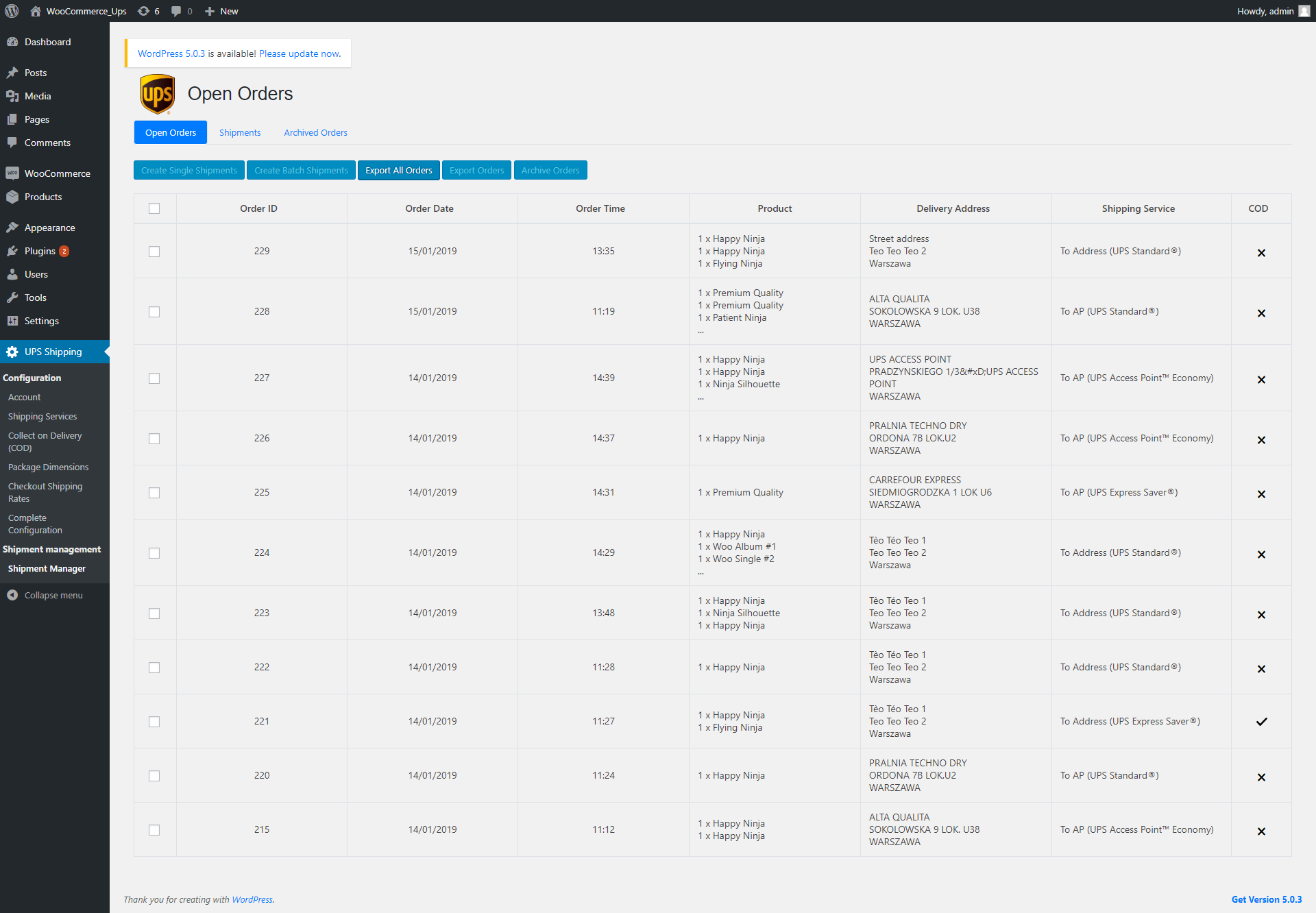
In the Open Orders tab, user can view all the orders which e-shoppers placed using UPS Shipping service.
In the Open Orders tab, user can view all the orders which e-shoppers placed using UPS Shipping serv
In the Open Orders tab, user can view all the orders which e-shoppers placed using UPS Shipping service.
User can select one or multiple orders to perform one of the following actions: Create shipments: co
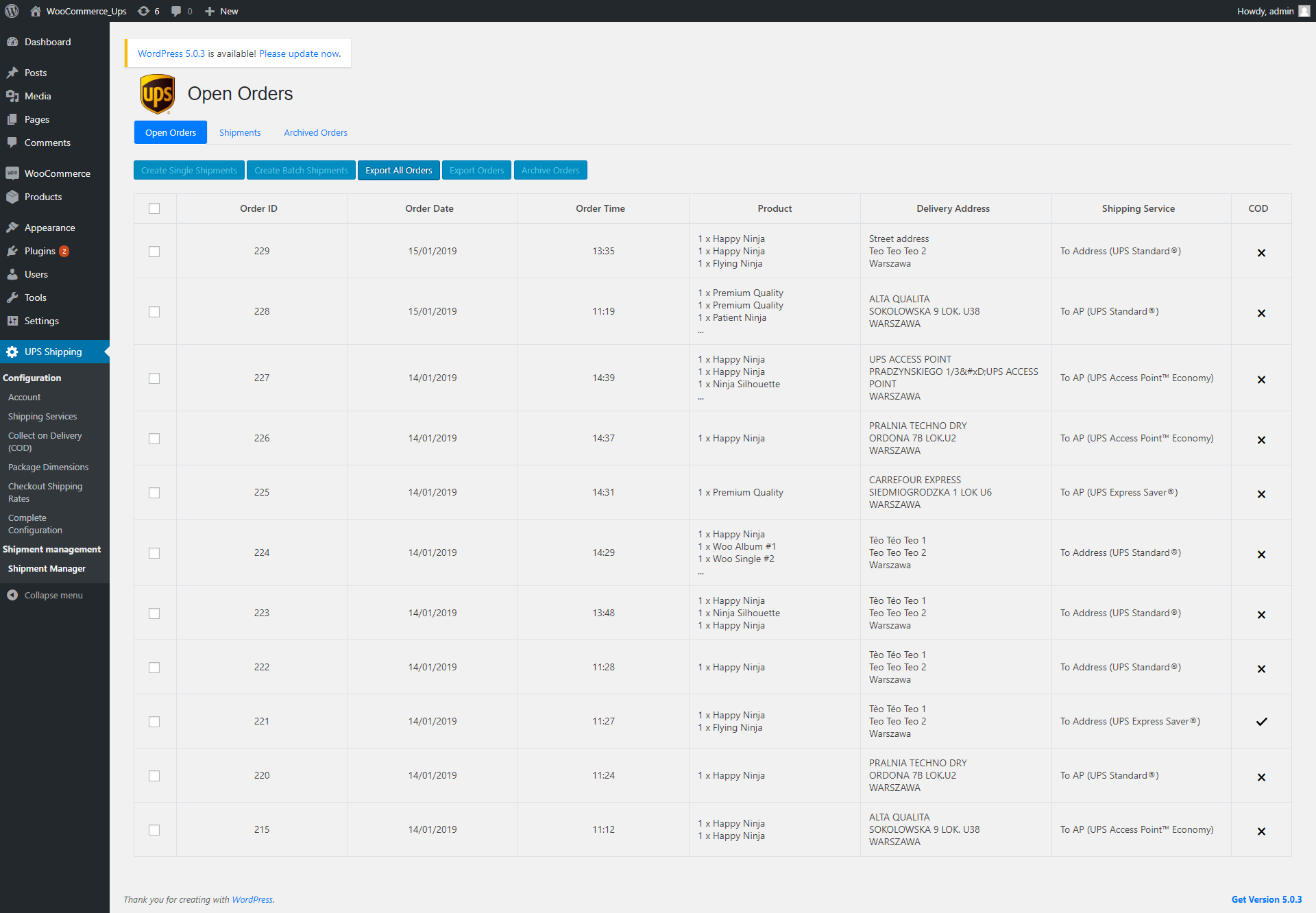
User can select one or multiple orders to perform one of the following actions: Create shipments: confirm the shipment with UPS. Please see in section 2.Creating Shipment for details of creating shipment function.
Export Orders: export your selected orders to an excel file so that you can import to other systems
Export Orders: export your selected orders to an excel file so that you can import to other systems to process shipment.
Export All Orders: export all the historical orders to excel file.
Export All Orders: export all the historical orders to excel file.
Archive Orders: put the orders to Archived Orders tab.
Archive Orders: put the orders to Archived Orders tab.
2. Tworzenie przesyłki
User can create shipment from one or multiple orders.
User can create shipment from one or multiple orders.
User can create shipment from one or multiple orders.

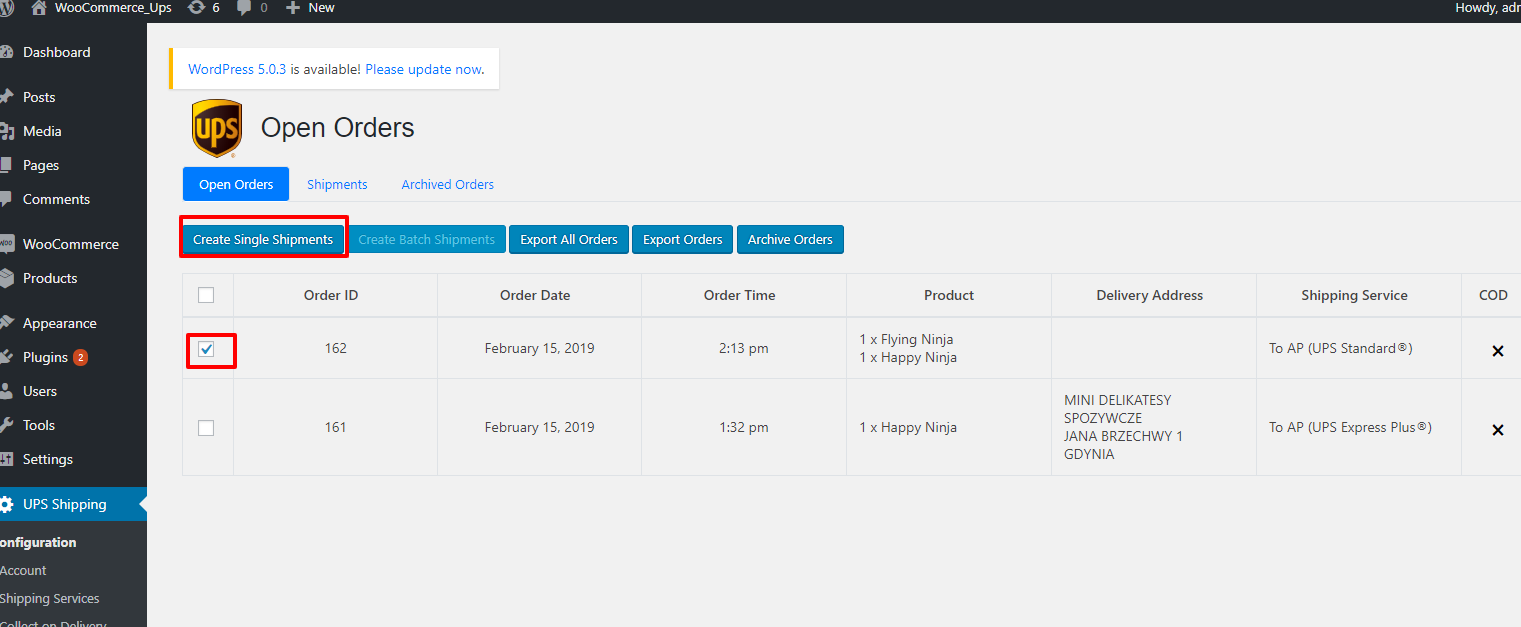
Create Single Shipments: User can selected multiple orders together categories.
Create Single Shipments: User can selected multiple orders together categories.

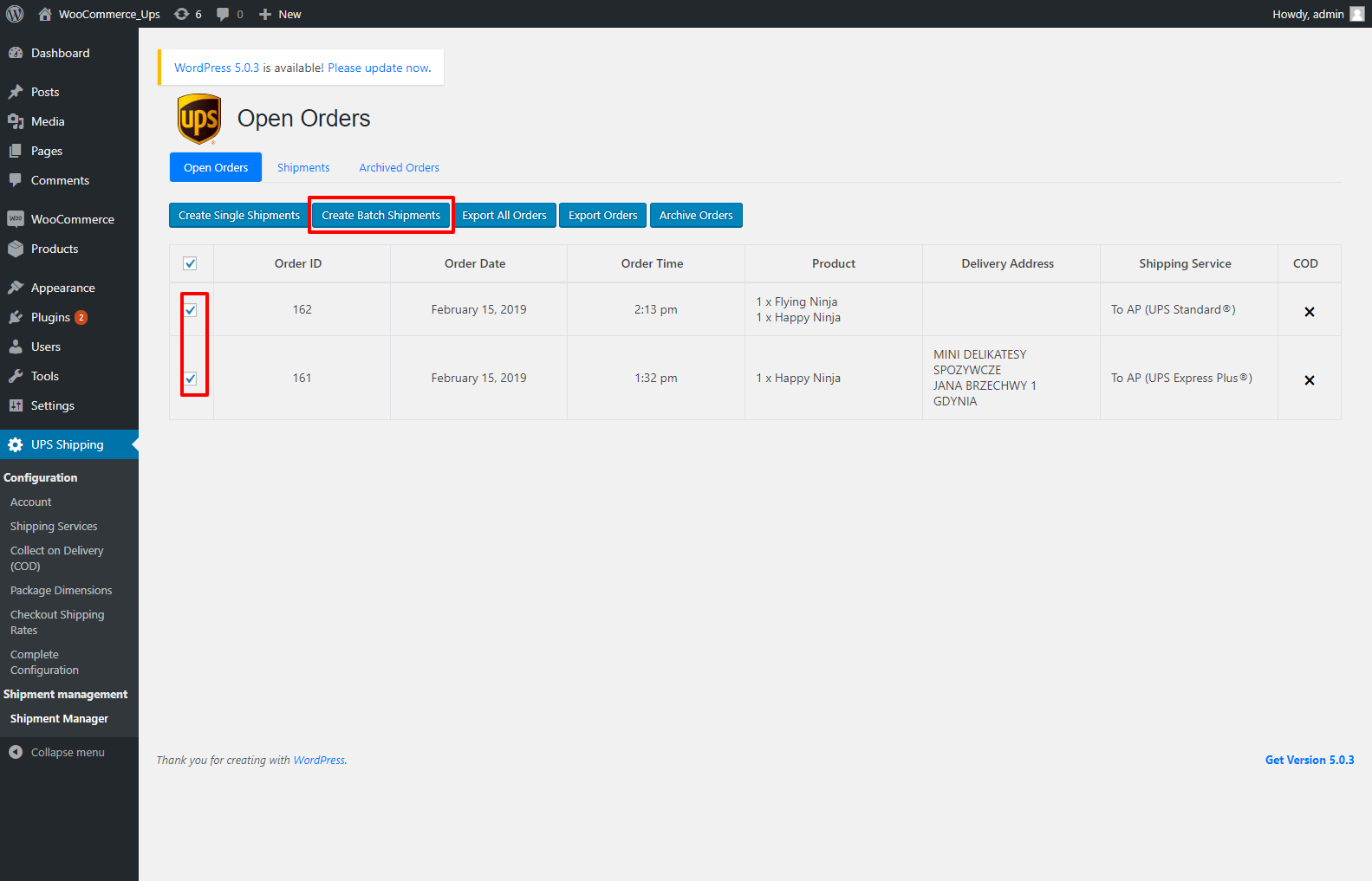
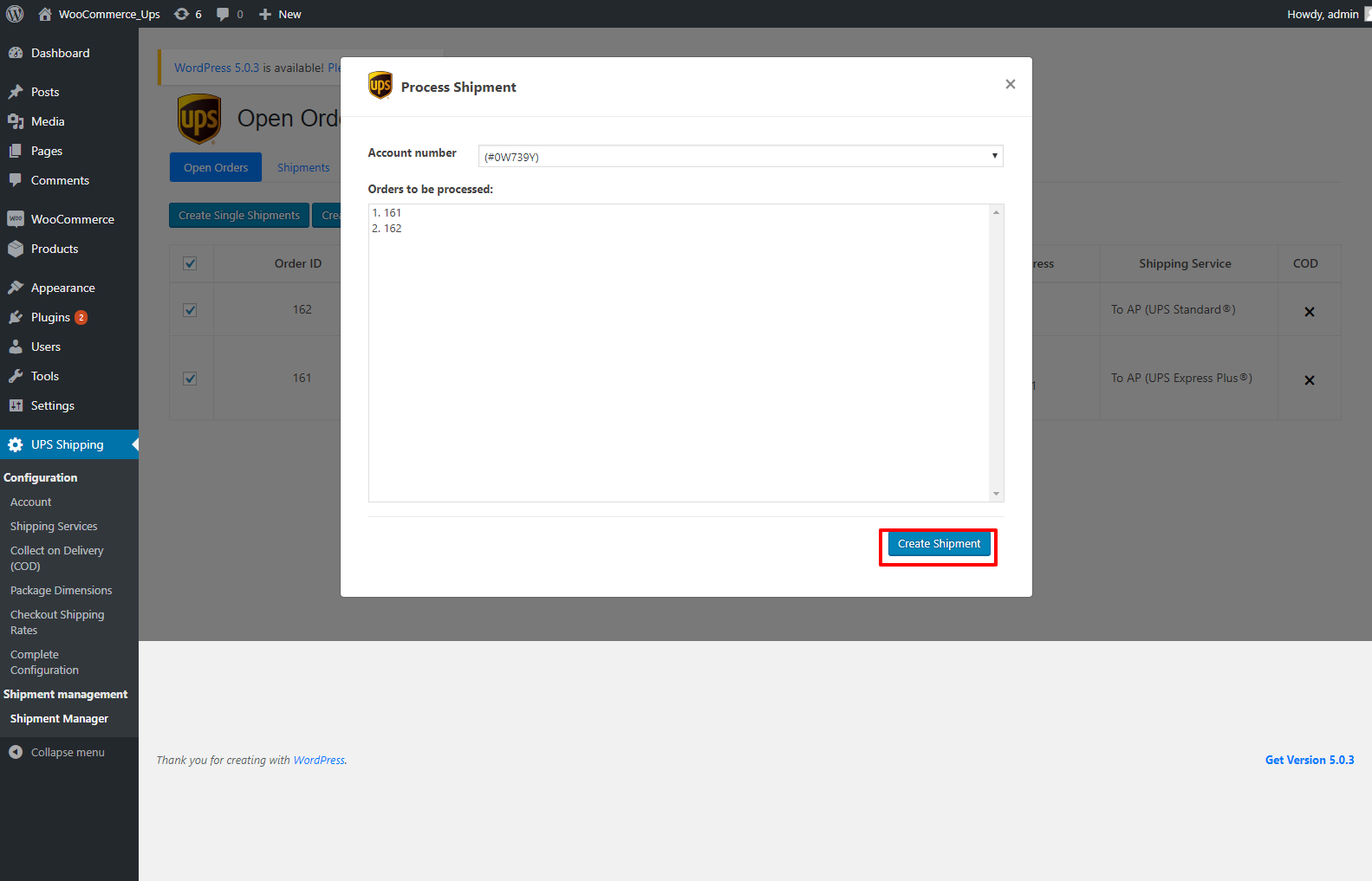
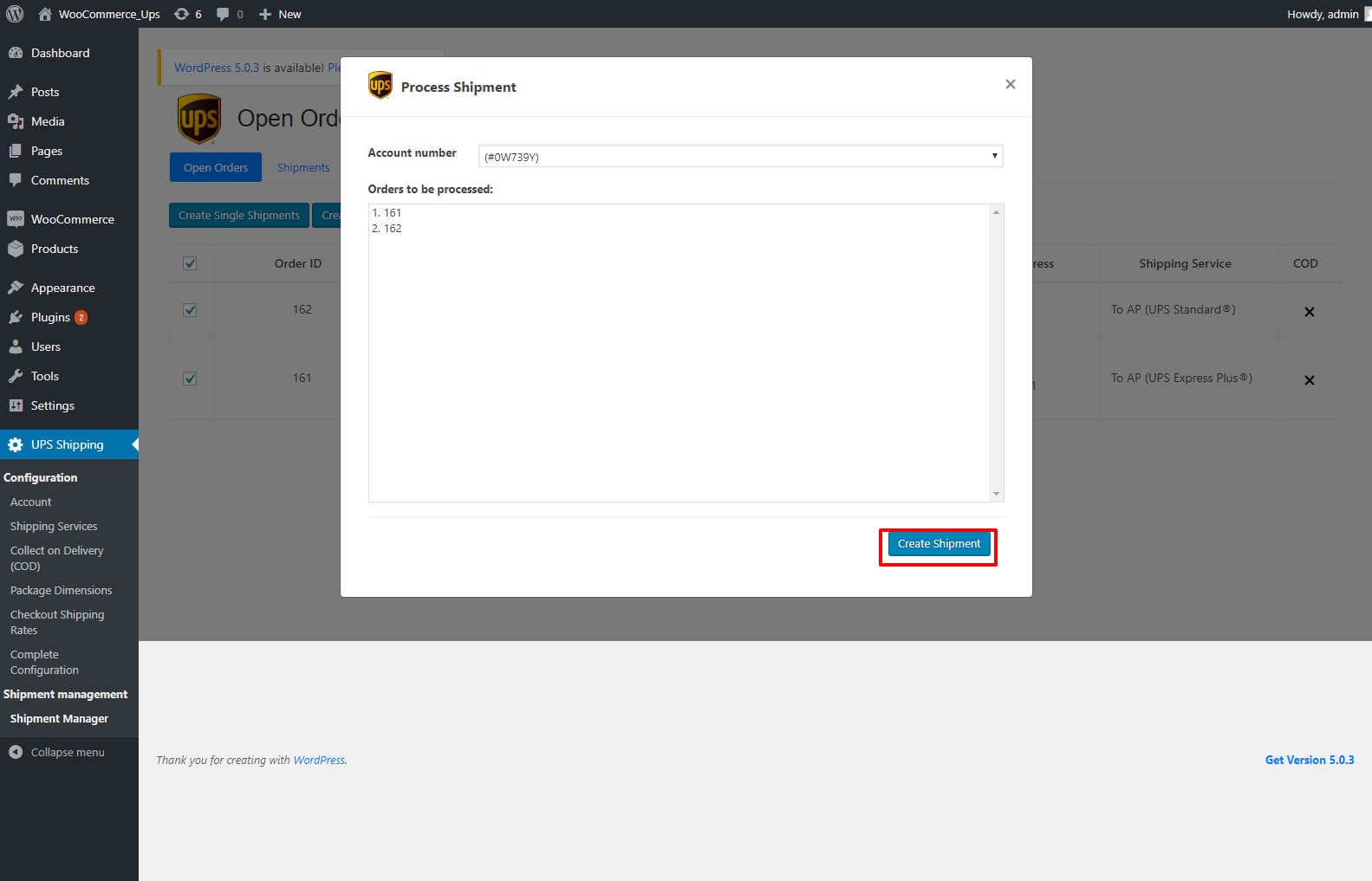
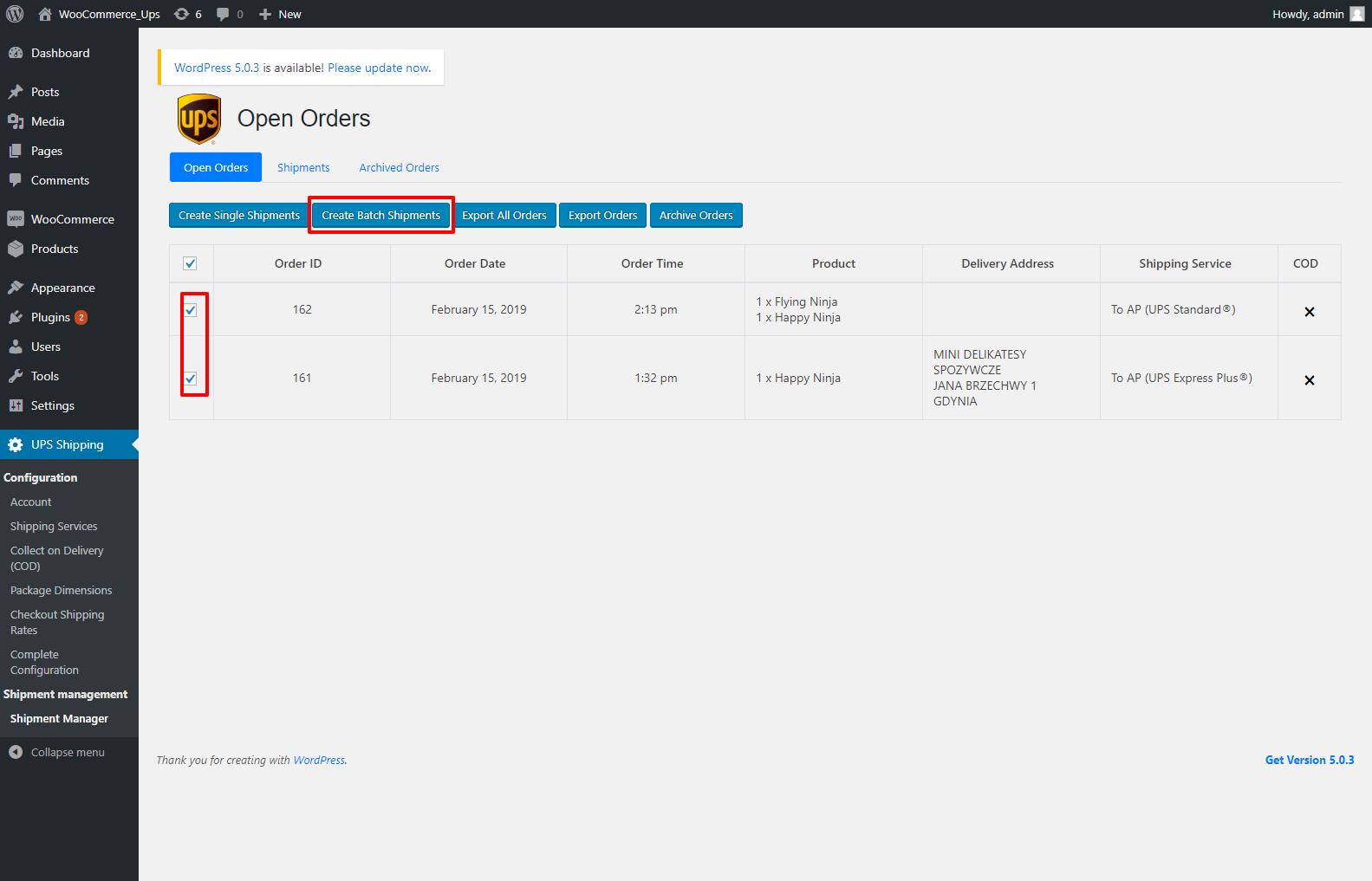
Create Batch Shipments: Apply for case user selected multiple orders.Figure 45 – Create batch shipm
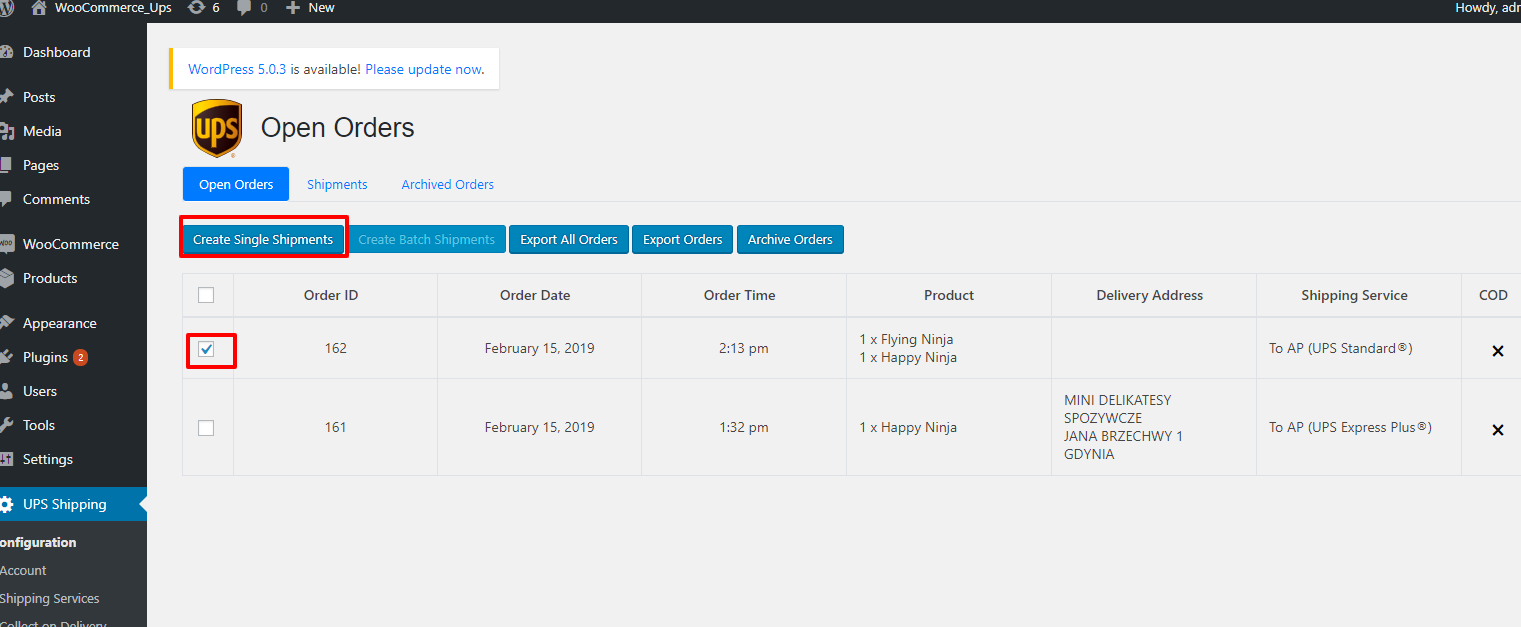
Create Batch Shipments: Apply for case user selected multiple orders.Figure 45 – Create batch shipments

Multiple-order Shipment: To create multiple-order shipment, select the orders by the checkboxes besi
Multiple-order Shipment: To create multiple-order shipment, select the orders by the checkboxes beside each order, then click Create Shipments.
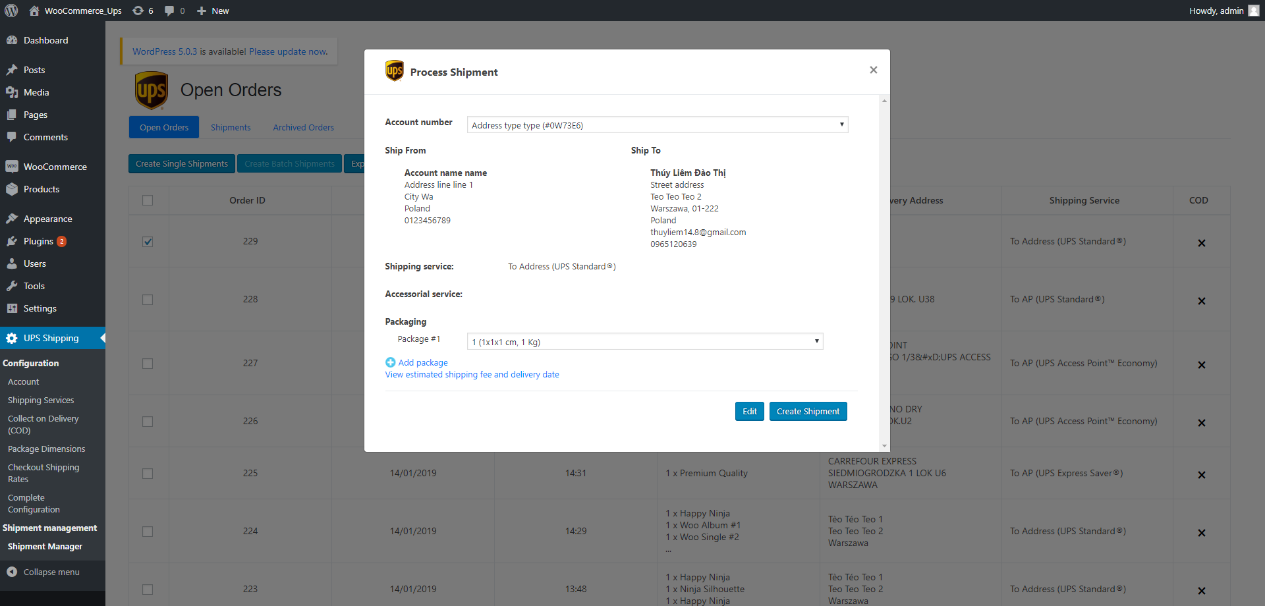
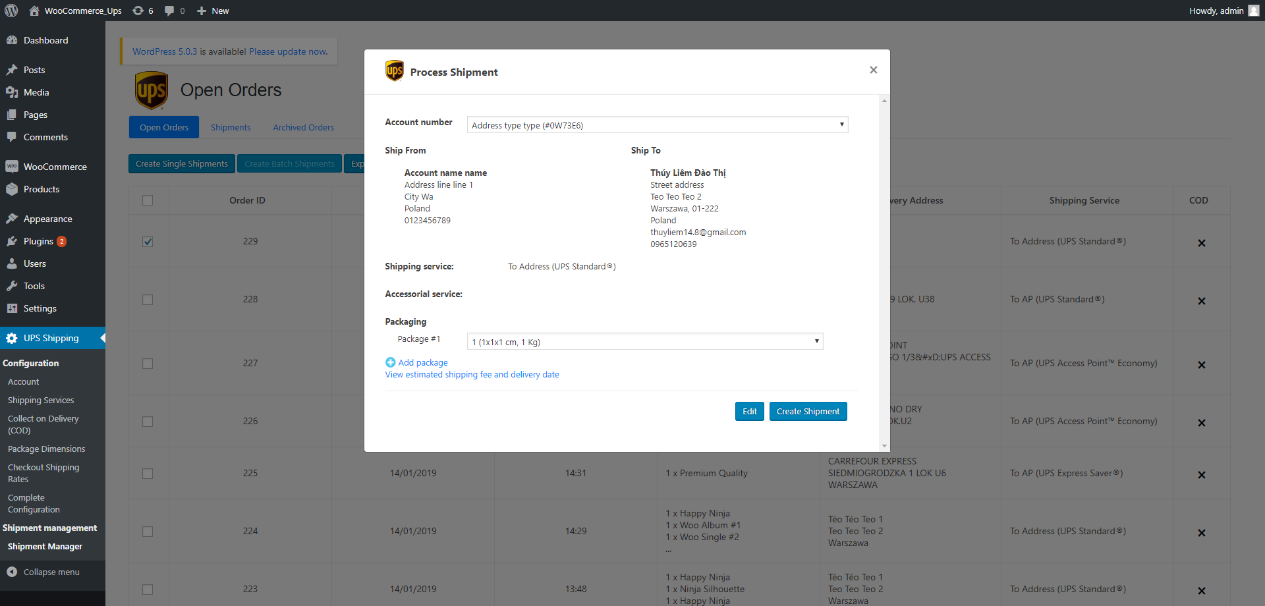
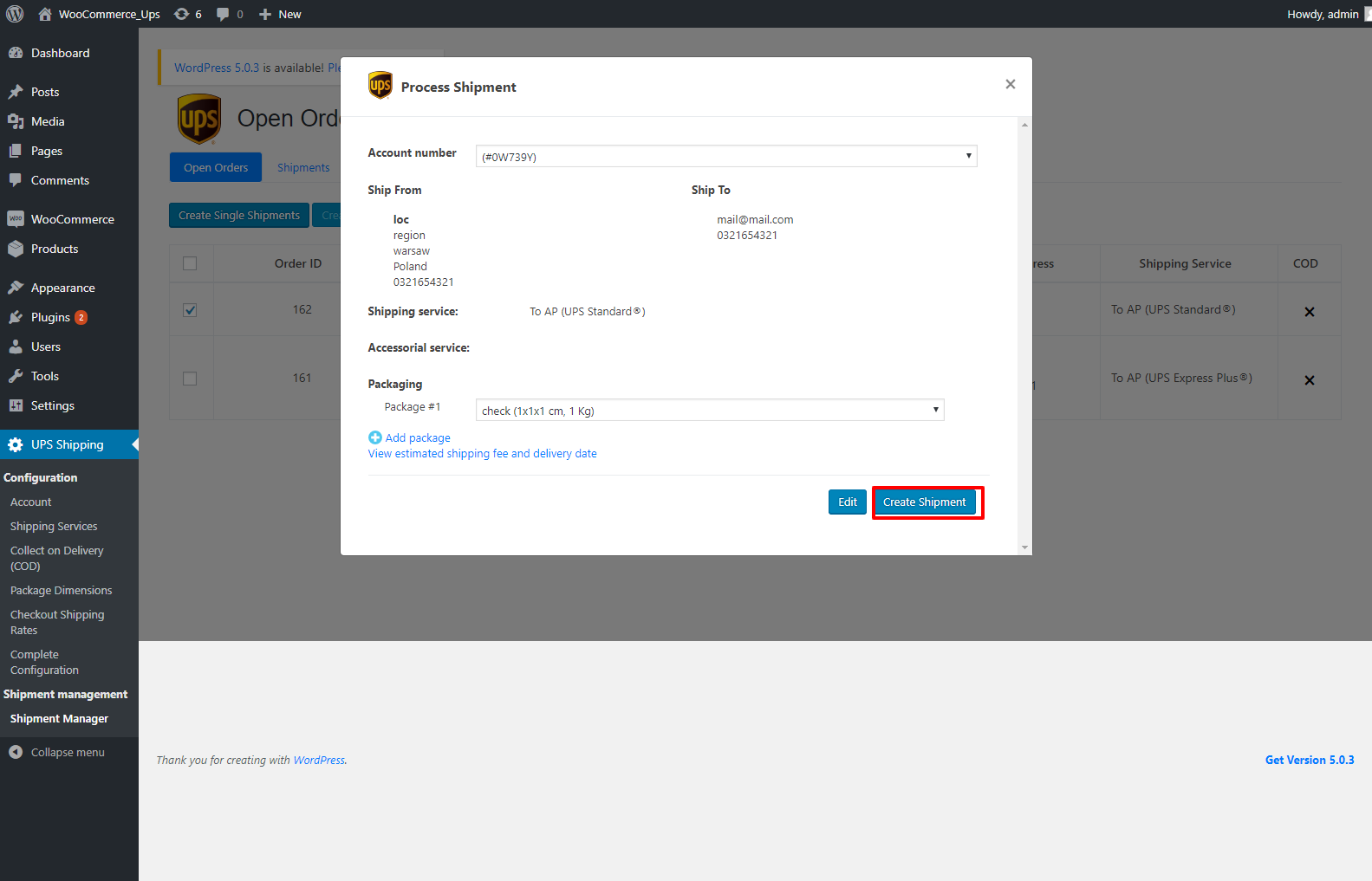
Edit shipment: User can edit the shipment before creating shipment by clicking to ‘Edit’ button.
Edit shipment: User can edit the shipment before creating shipment by clicking to ‘Edit’ button.
Account number selection: Select the Account number to associate with the shipment by the dropdown ‘
Account number selection: Select the Account number to associate with the shipment by the dropdown ‘Account Number’.
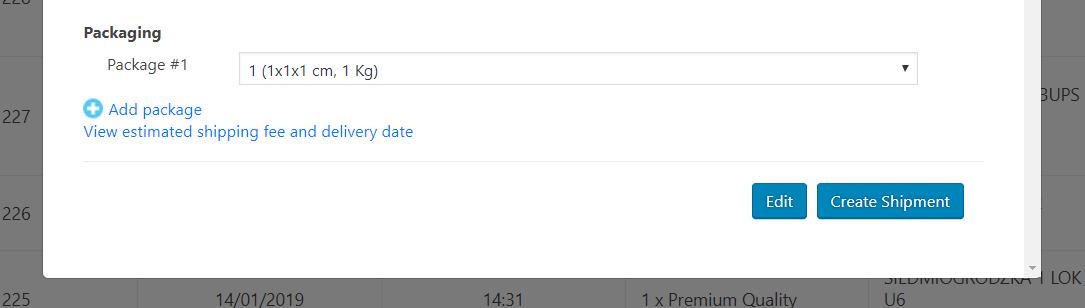
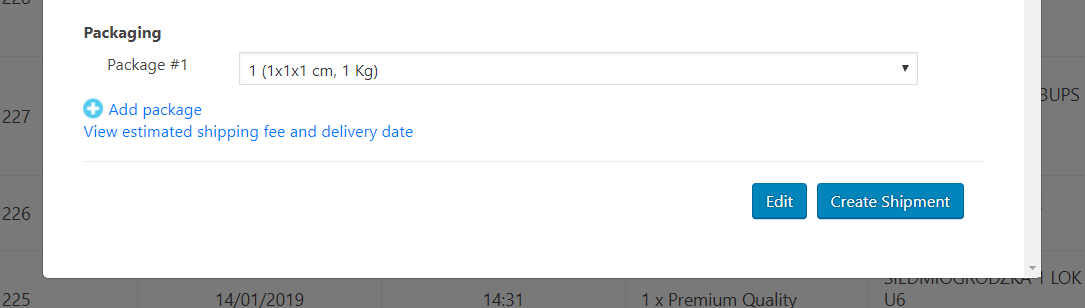
Package selection: Add more packages to the shipment by ‘Add package’ icon.
Package selection: Add more packages to the shipment by ‘Add package’ icon.

Adding new package to a shipment
Adding new package to a shipment
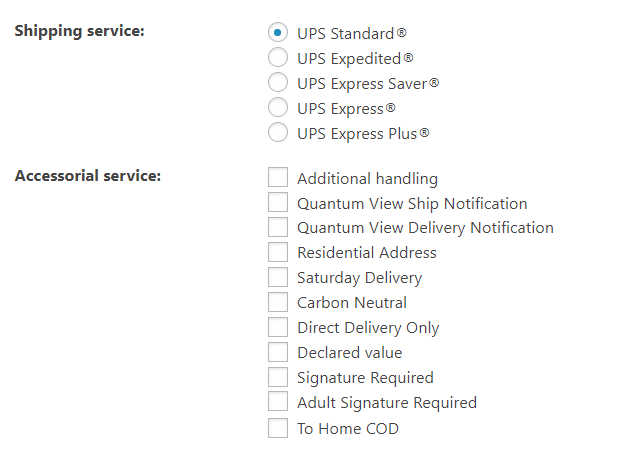
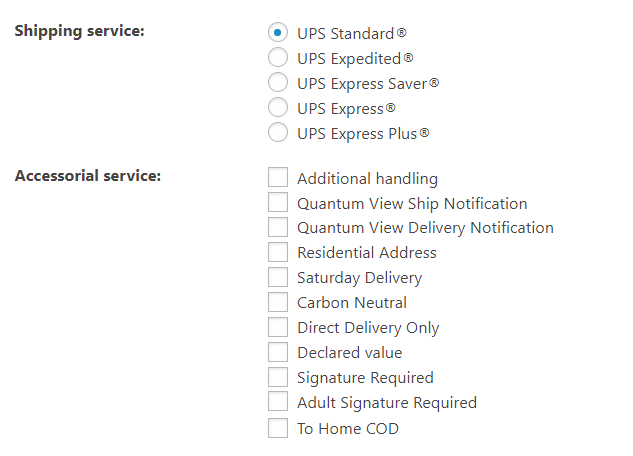
Edit Shipping services and Accessorial services before creating a shipment: User can change the ship
Edit Shipping services and Accessorial services before creating a shipment: User can change the shipping service and accessorial services of the shipment by selecting in the service list.
Note: When user select ‘Declared value’ accessorial service to apply to a shipment, that value is au
Note: When user select ‘Declared value’ accessorial service to apply to a shipment, that value is automatically load from the associated order value from WooCommerce database.
User can check the estimated shipping fee and estimated delivery date of the current shipment by cli
User can check the estimated shipping fee and estimated delivery date of the current shipment by clicking on the link ‘View estimated shipping fee and delivery rate’ at the bottom of the window.
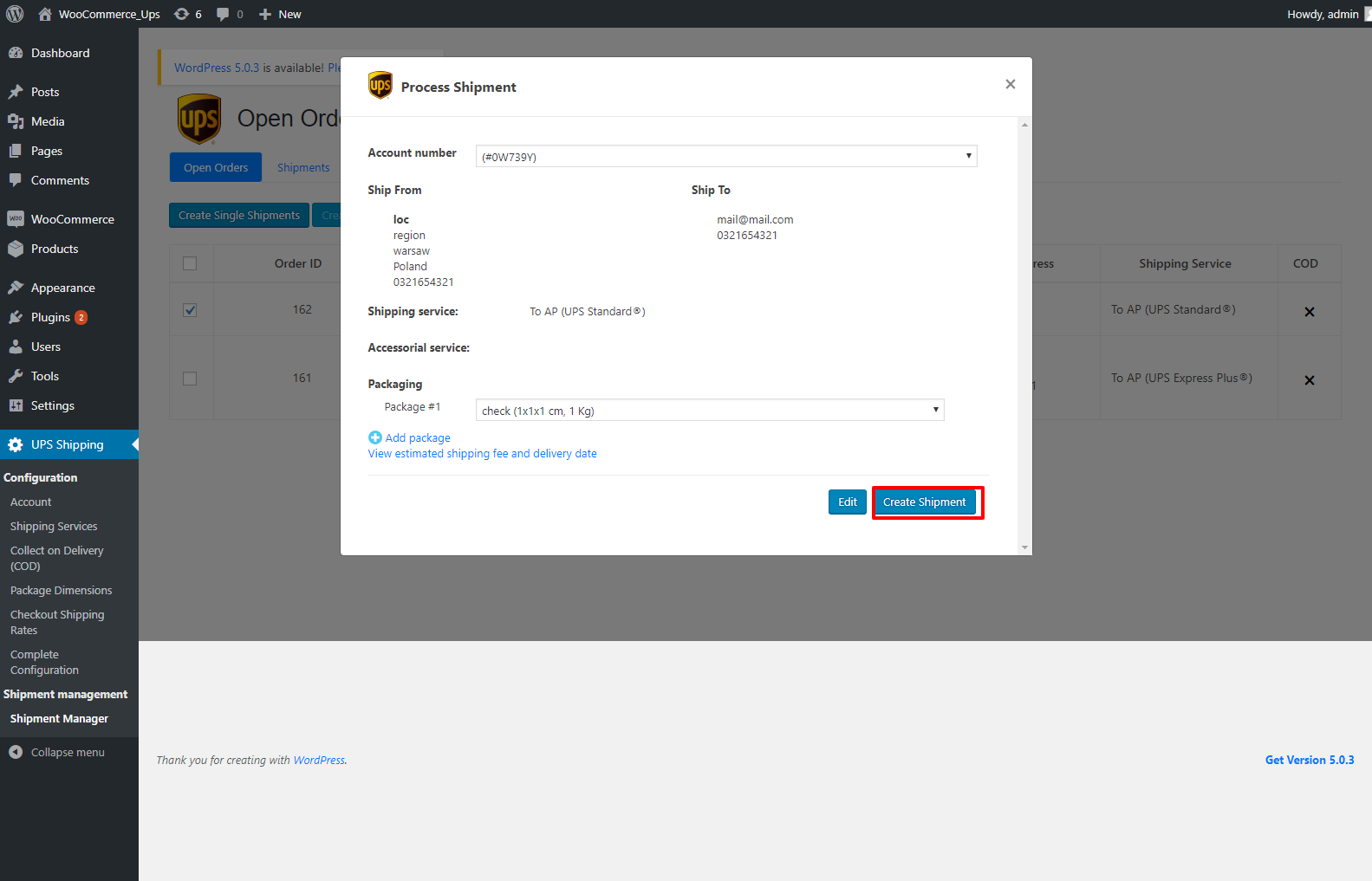
User confirm creating shipment by clicking to button ‘Create Shipment’.
User confirm creating shipment by clicking to button ‘Create Shipment’.
3. Przesyłki
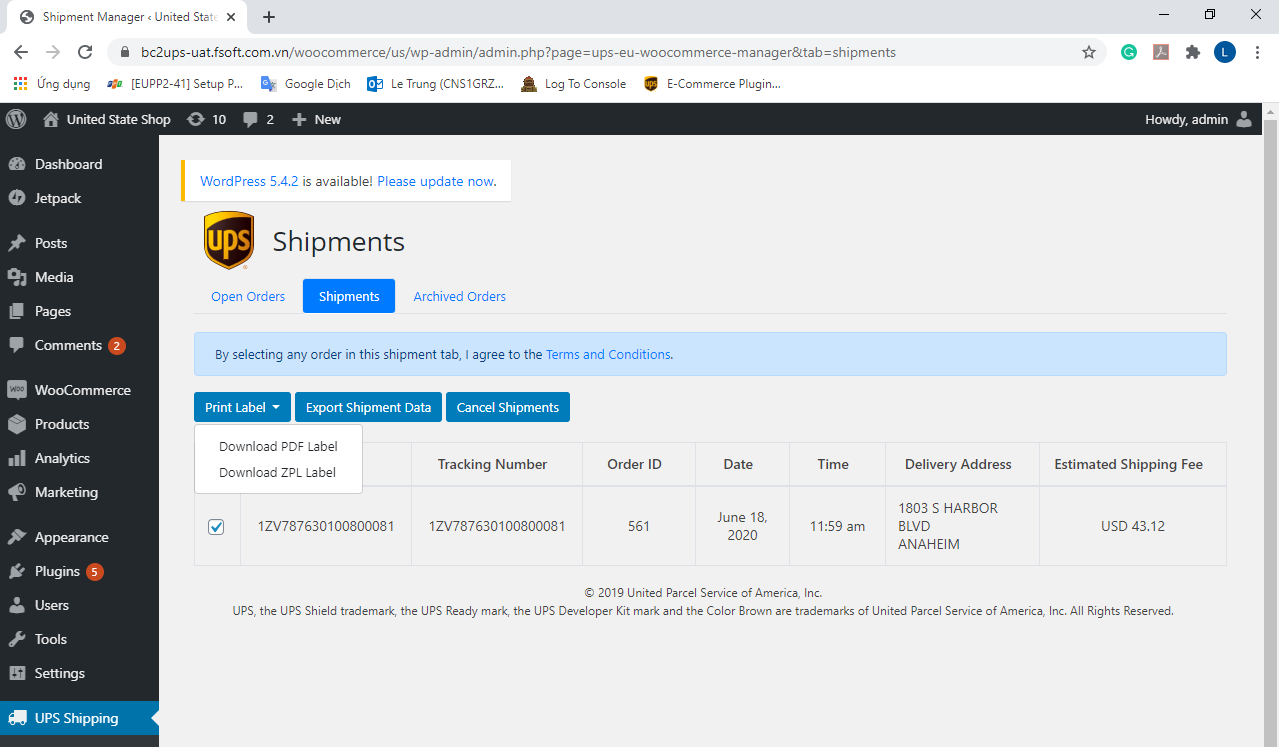
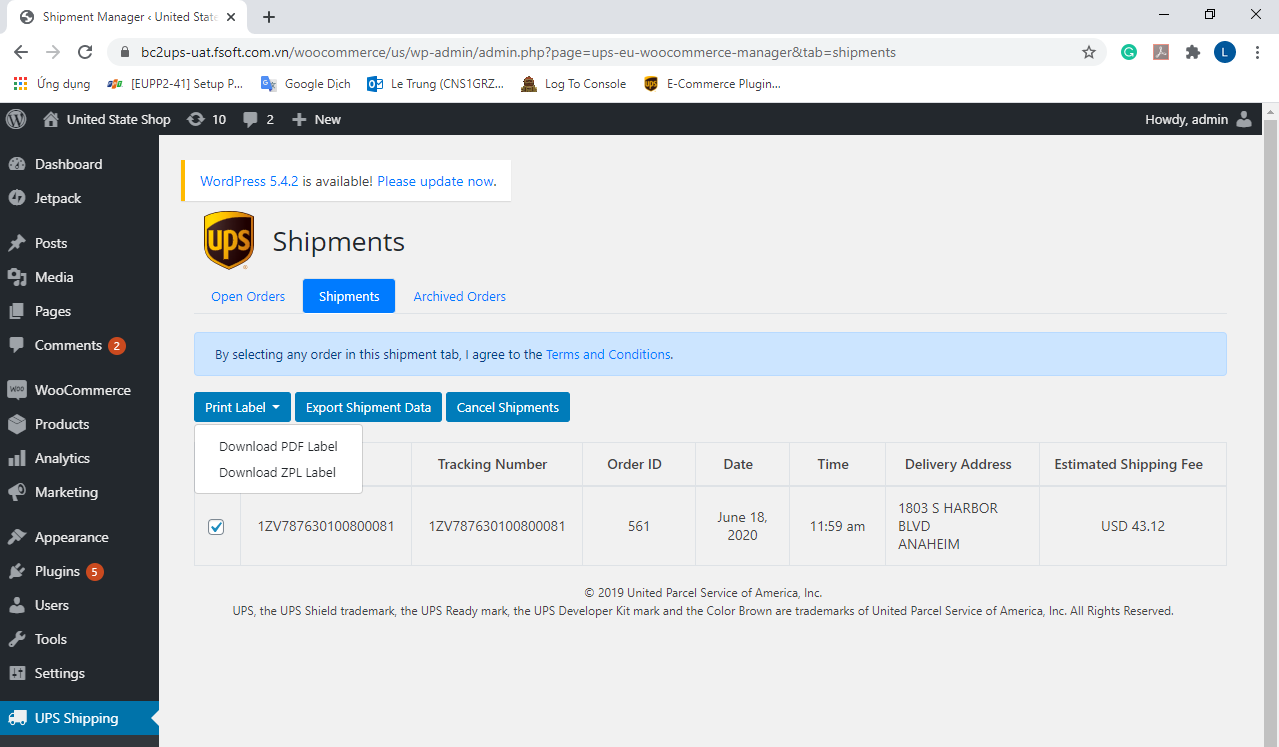
User can view the list of shipments created in the ‘Shipments’ tab.
User can view the list of shipments created in the ‘Shipments’ tab.
User can view the list of shipments created in the ‘Shipments’ tab.

From this tab user can select one or multiple shipments and process the following actions: Download
From this tab user can select one or multiple shipments and process the following actions: Download PDF Label: user can download a zip PDF file of shipping labels of the selected shipments by clicking on ‘Download PDF Label’ button.
Download ZPL Label: user can download a zip ZPL file of shipping labels of the selected shipments by
Download ZPL Label: user can download a zip ZPL file of shipping labels of the selected shipments by clicking on ‘Download ZPL Label’ button. Customer can use these files to print on the labels on ZPL supported printer. As an example, refer below link on how you can print ZPL labels - https://supportcommunity.zebra.com/s/article/ZebraDesigner-Driver-and-the-Send-File-Feature?language=en_US

Export Shipments: user can export the data of all the selected shipments to an Excel file by clickin
Export Shipments: user can export the data of all the selected shipments to an Excel file by clicking on ‘Export Shipment Data’ button.
Cancel Shipments: user can cancel the selected shipments by clicking on ‘Cancel Shipments’ button. T
Cancel Shipments: user can cancel the selected shipments by clicking on ‘Cancel Shipments’ button. The shipment can only be cancelled if it is not yet processed by UPS. If the shipment is already in transit or delivered, it cannot be cancelled from this screen.

If the shipment is successfully voided, the status of the associated orders will be changed to ready
If the shipment is successfully voided, the status of the associated orders will be changed to ready to processed, and the orders will appear in the Open Order tab.
4. Zamówienia archiwalne
User can put the orders into Archived Orders tab by selecting the orders from Open Orders tab and select action Archive Order.
User can put the orders into Archived Orders tab by selecting the orders from Open Orders tab and se
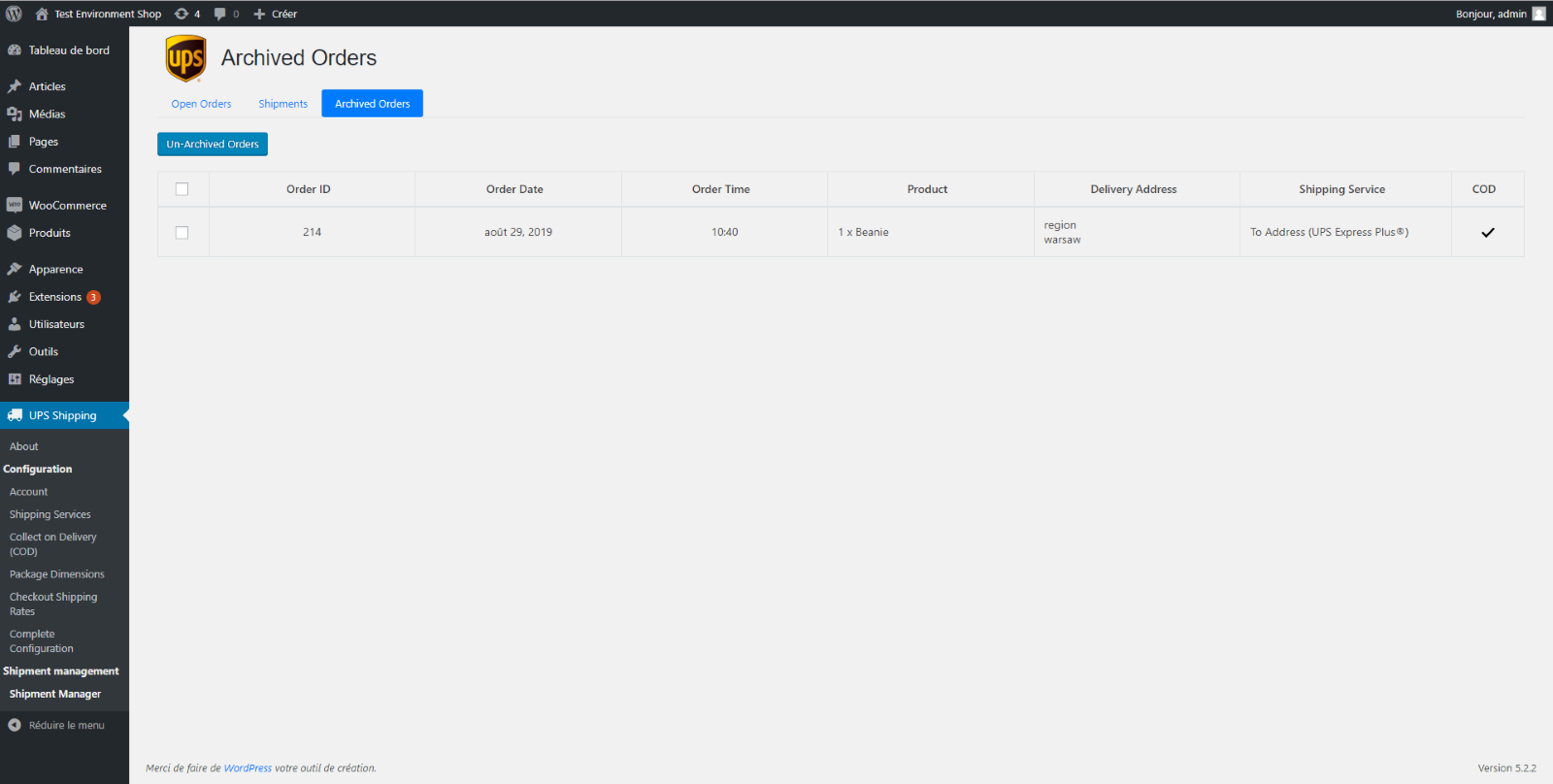
User can put the orders into Archived Orders tab by selecting the orders from Open Orders tab and select action Archive Order.
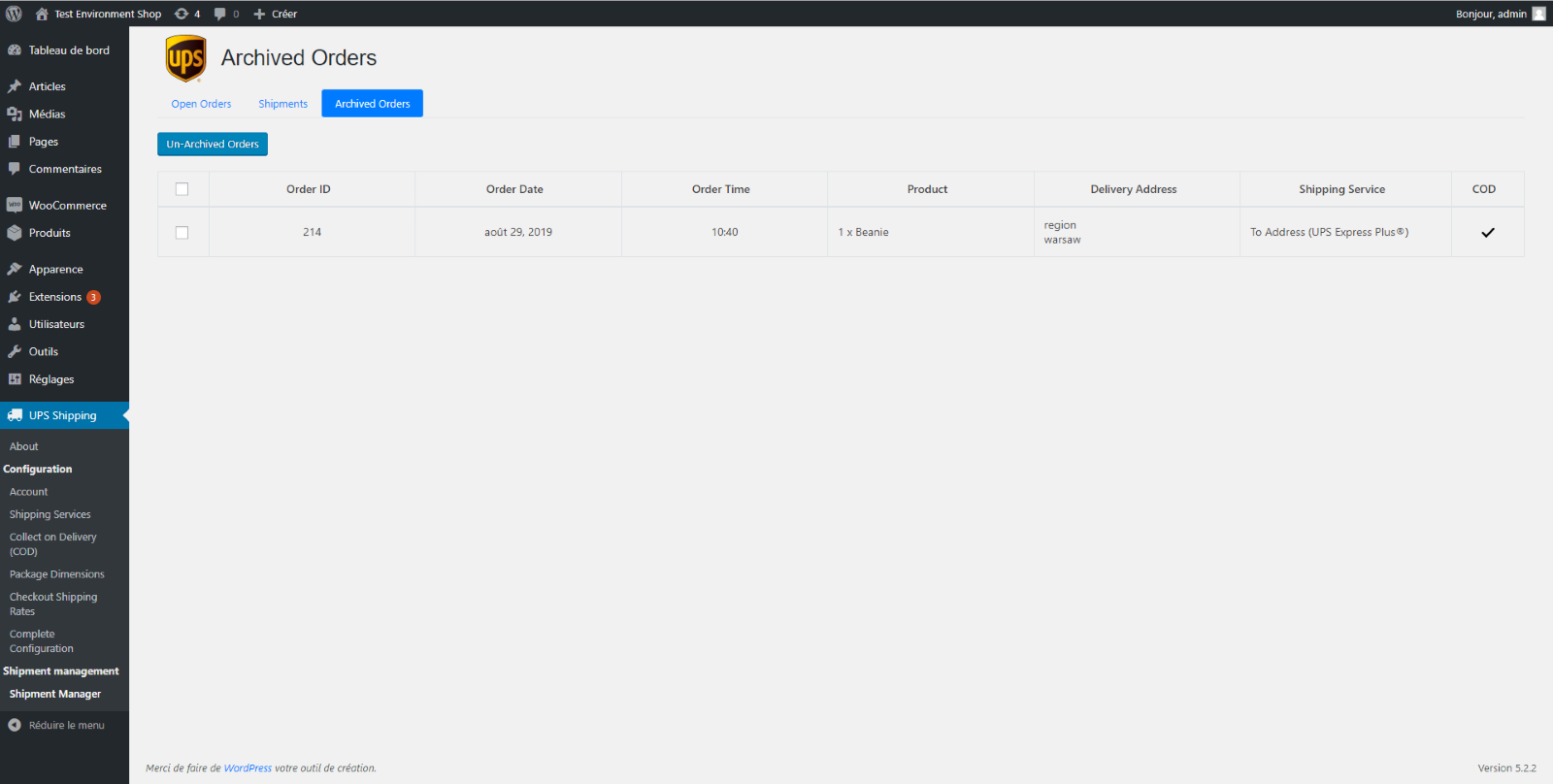
User can view the archived orders by clicking to the tab Archived Orders.
User can view the archived orders by clicking to the tab Archived Orders.
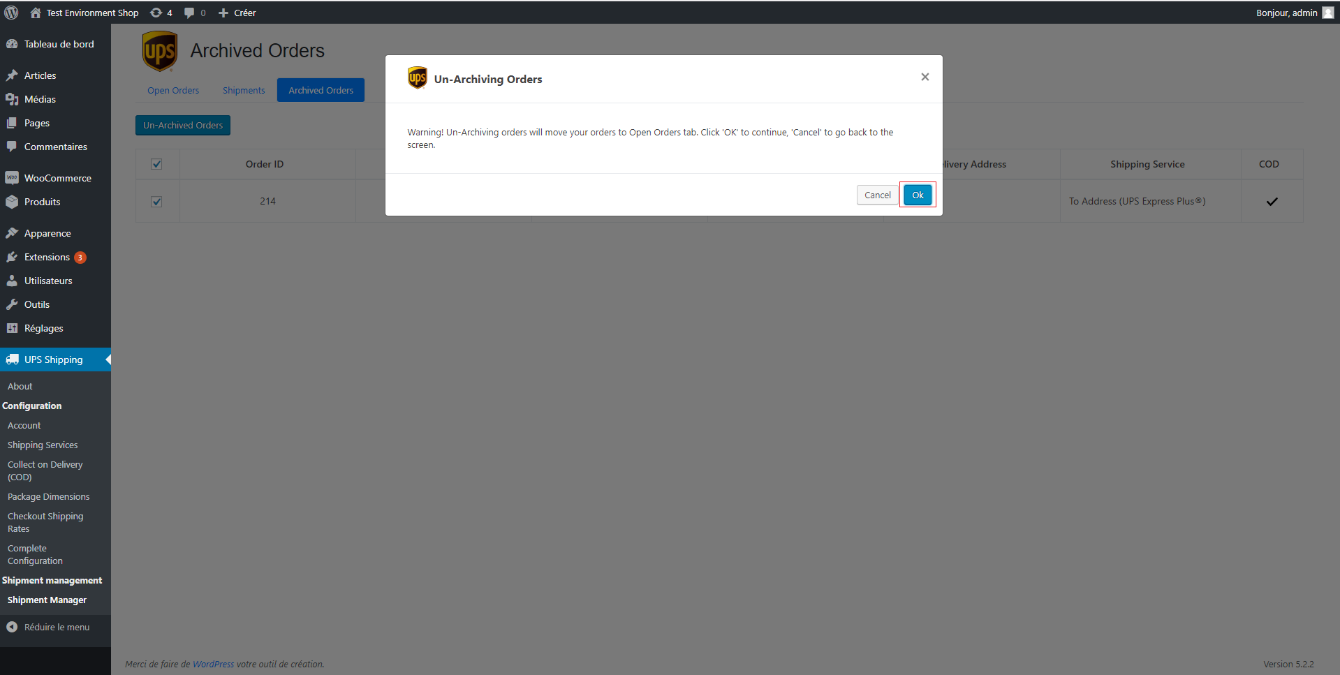
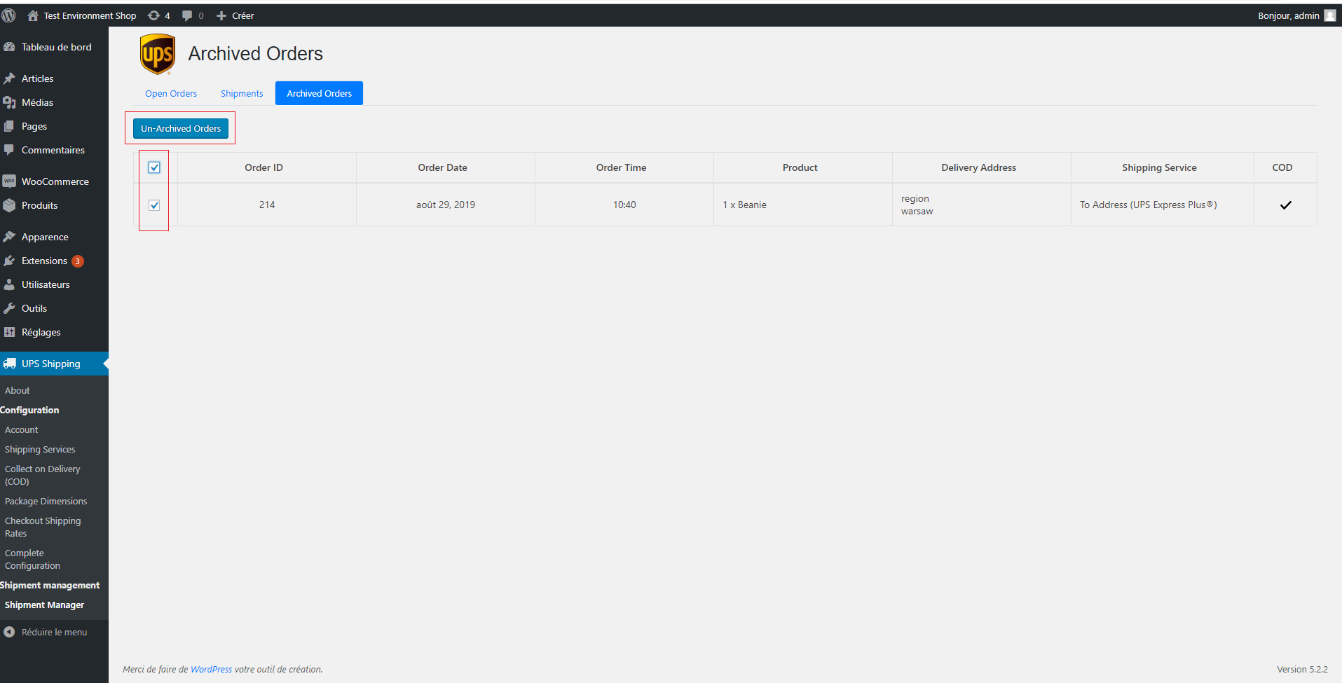
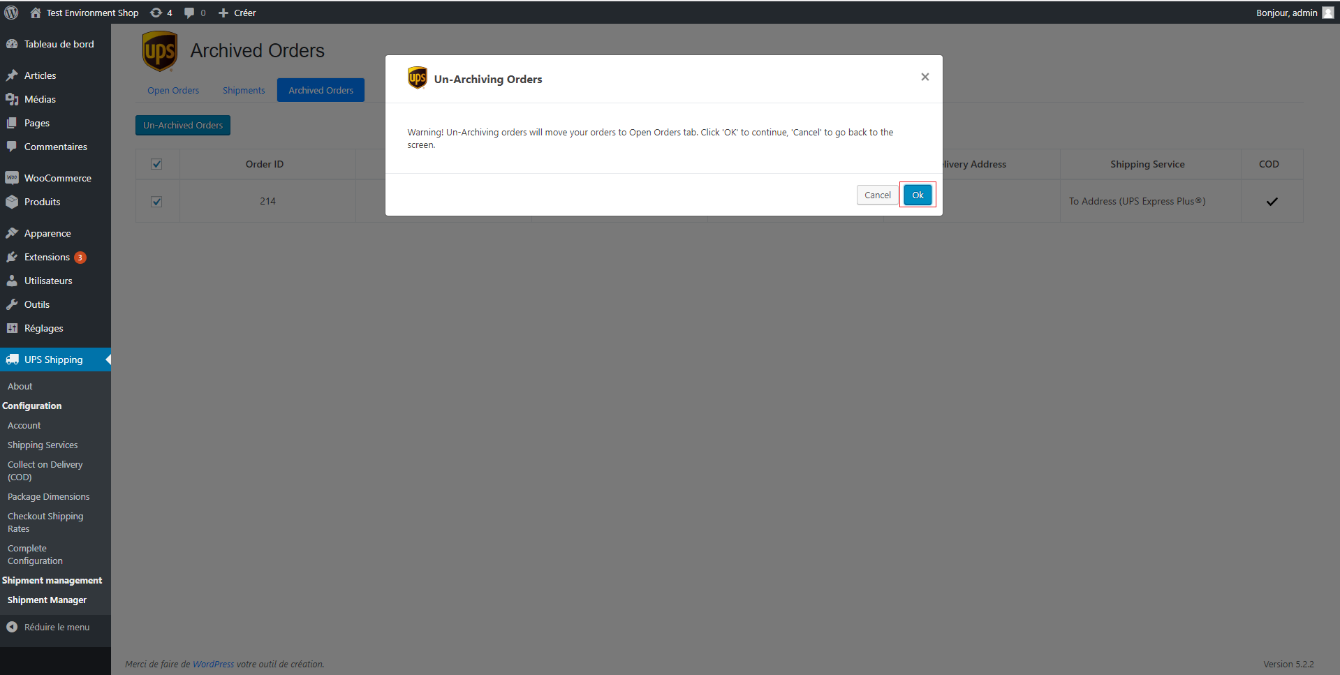
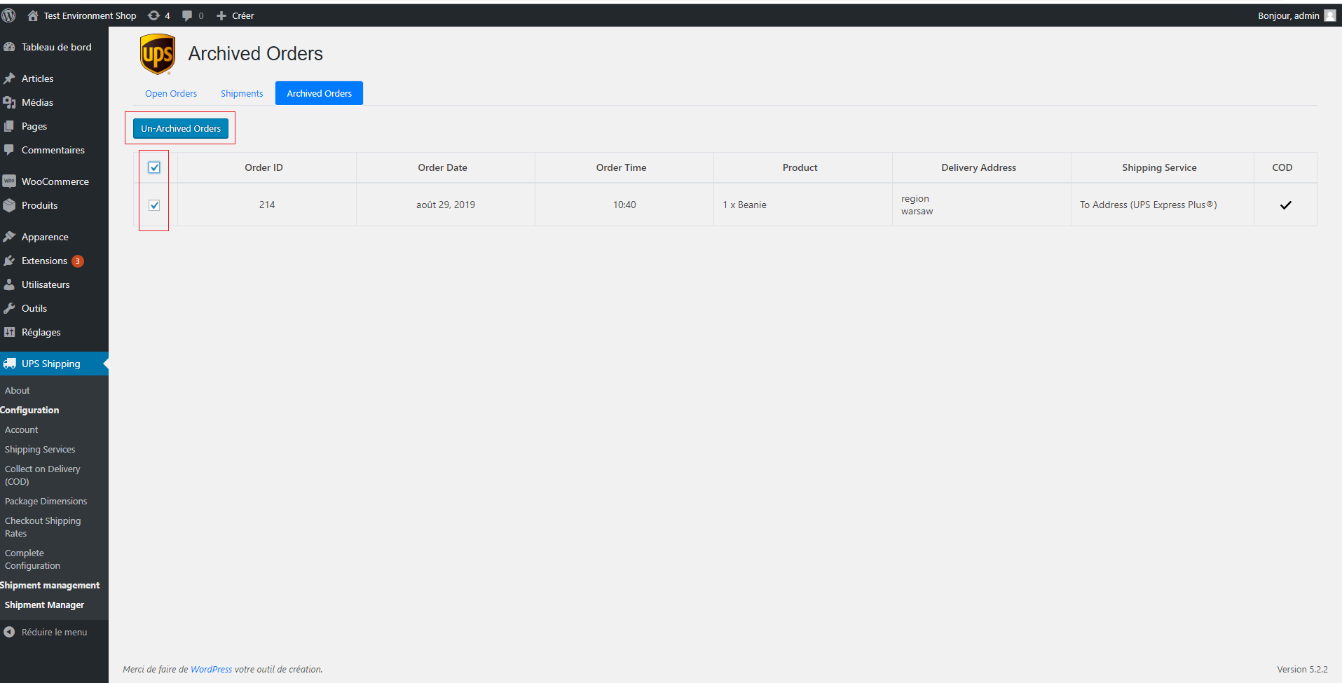
Once an order is placed on the Archived Orders tab, that order can be placed back by selecting the o
Once an order is placed on the Archived Orders tab, that order can be placed back by selecting the orders you want to return and clicking Un-Archived Orders and clicking OK.
5. Przechowywanie danych
Data in ‘Open Orders’ tab for over 90 days will be moved to ‘Archived Orders’ tab.

Data in ‘Open Orders’ tab for over 90 days will be moved to ‘Archived Orders’ tab.
Data in ‘Open Orders’ tab for over 90 days will be moved to ‘Archived Orders’ tab.
Data in ‘Archived Orders’ tab for over 90 days will be deleted.
Data in ‘Archived Orders’ tab for over 90 days will be deleted.
Data in ‘Shipment’ tab for over 90 days will be deleted.
Data in ‘Shipment’ tab for over 90 days will be deleted.